18 February 2013

Rosa Barba at Turner Contemporary

Carl Andre might be luring the crowds to Turner Contemporary this winter but the concurrent exhibition of work by Rosa Barba is worth much more than a glance.  Barba presents film as sculpture, with visual equipment used to produce an absence of image.


Color Clocks: Verticals Lean Occasionally Consistently Away from Viewpoints, 2012

3 filmic sculptures, 3 x 35mm film, motors


Space-Length Thought, 2012
16mm film, projector, typewriter,
 installation view: Kunsthaus Zurich, 2012

On a grey day it was impossible to see the white space Barba is projecting on the sea outside the gallery, but this perhaps made the attempt to frame a small section of the limitless more moving.  Her film, Subconscious Society, similarly ties land and water, tracing the marks left by industrial heritage on the landscape around Margate and also Manchester, where a parallel exhibition runs at The Cornerhouse.


Subconscious Society, 2013 
film stills 35mm

all images © Rosa Barba

20 January 2013

P.E.A.R. 5 launch

Thanks to everyone who came to the Architecture Foundation last week.  Luckily we just about managed to squeeze in the launch before the snow arrived!  If you weren't able to join us and are worried that you might have missed your chance to get your hands on a copy of the fantastic new issue, fear not.  It is now available from all (very) good bookshops, as detailed to the right...


17 January 2013

TONIGHT!

It's been an admittedly slow start to the new year on the P.E.A.R. blog... Normal service will resume next week.  In the meantime, don't forget we're launching the new issue of the paper tonight!  Hope to see you at the Architecture Foundation from 6.30pm.


21 December 2012

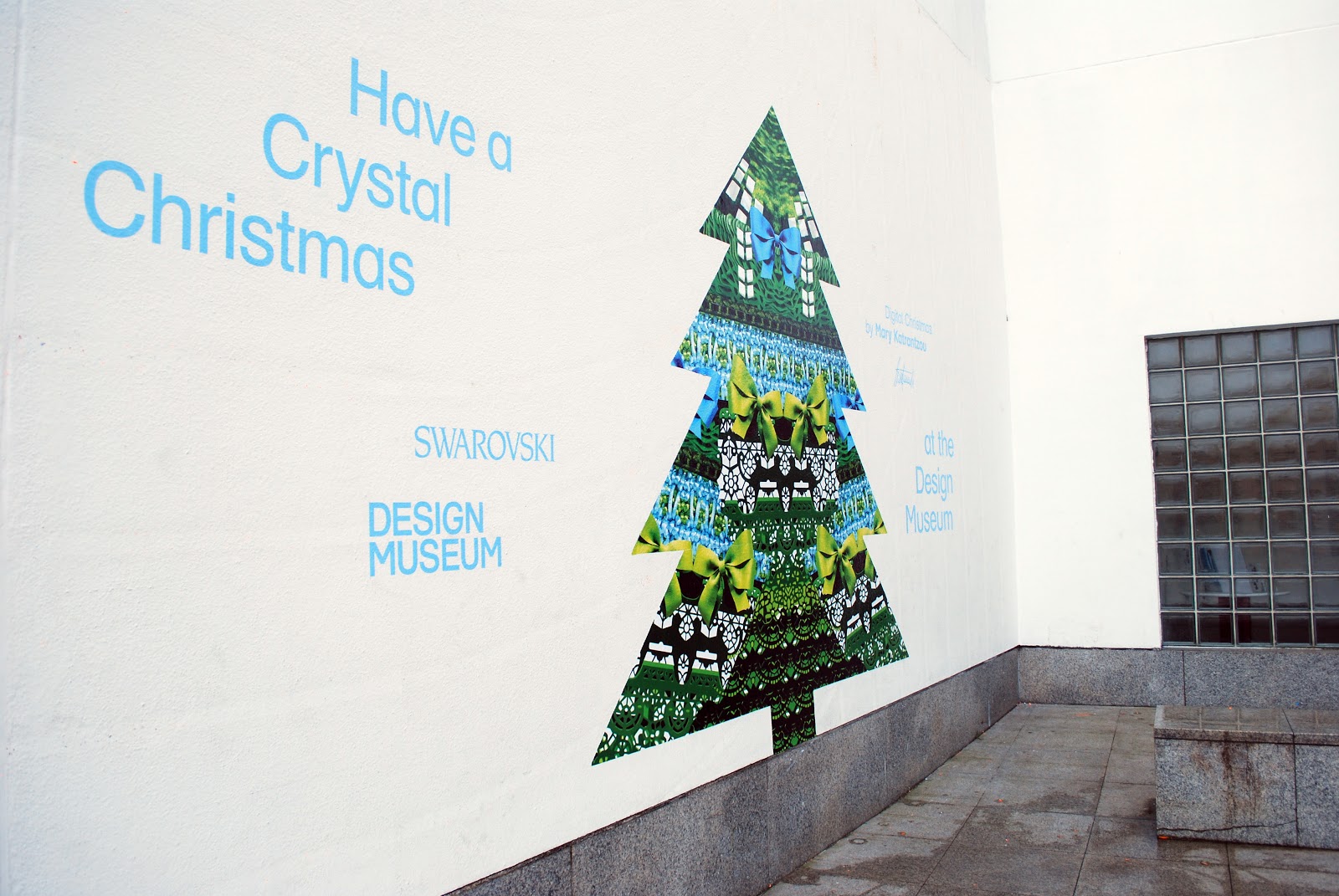
Merry Christmas


Mary Katrantzou for the Design Museum
Shad Thames, London SE1 2YD


Kally Ellis for McQueens at Claridges
Brook Street, Mayfair, London W1K 4HR


Victoria and Albert Museum
Cromwell Road, London, SW7 2RL

17 November 2012

Post Works lecture at the Bartlett School of Architecture

Matthew will be presenting a range of recent projects by his practice Post Works on Thursday 22 November at the Royal Ear Hospital.  The lecture starts at 6.30pm and former P.E.A.R. contributor Pablo Bronstein will be amongst the respondents...  Hopefully see you there!


12 November 2012

Made In (Guimaraes/Portugal)

Post Works (Matthew Butcher and Chryssanthi Perpatidou), in collaboration with artist Pablo Bronstein, have just won a competition to design a new washhouse for the city of Guimaraes in Portugal.  The competition formed part of the city's art and architecture programme as European Capital of Culture, 2012.  The design, responding to the 'Made In (Guimaraes/Portugal)' closed-call competition, presents a new, hybrid and satirical take on the washhouse typology commonly seen in northern Portugese towns.  Here are some of the drawings for the competition, and also some installation shots of the exhibition in Guimaraes where the competition designs are currently on display.


31 October 2012

Thomas Houseago

For his debut exhibition with Hauser and Wirth, Thomas Houseago filled the two vast galleries on Savile Row with equally monumental figures, relief wall panels and abstract, columnar lamps.  The monumentalism of his imposing figures, gathered together in the North Gallery and looming through the plate glass windows was, however, belied by their tender fragility.

Houseago works in traditional, low-grade materials including plaster, hemp, graphite and iron rebar before recasting in bronze. The structural components of his final works are left visible. The iron rebar which forms the skeleton of each figure can be seen through gaping wounds in its plaster skin and the artist's own handprint is visible in the shaping and carving of the sculpture's surface.  The performative act of Houseago's sculpting is emphasised and although the artist looks back to art history these figures deconstruct Renaissance sculptural form.  Their brute machismo is in decline.  


Thomas Houseago I'll be your sister
Hauser & Wirth London, Savile Row, North Gallery

Thomas Houseago Special Brew
Hauser & Wirth London, Savile Row, South Gallery

7 September - 27 October 2012

13 October 2012

A house to die in

Since 2011 the artist Bjarne Melgaard and the Norwegian architectural firm Snohetta have been exchanging drawings, models and documents as they work towards the realisation of a purpose-built house for the artist ‘to die in’.  The exhibition ‘Bjarne Melgaard: A House to Die In’ at the ICA in London brings together their paper architecture, along with cluttered but related ephemera from the artist’s studio, laying bare the details of their design process and also their unusual client/architect relationship.


Looming ominously over the lower gallery space is a 1:1 façade of the proposed building, its angled black surfaces glowing red from within.  The model seems at once bestial and otherworldly, an alien space shuttle that has landed accidentally in a similarly distorted domestic setting, complete with rucked yellow carpet scrawled with purple heads.


Tables in this lower gallery space groan under the weight of further, smaller, models, reams of printed correspondence, Melgaard’s scribbled drawings and the aforementioned ephemera from his studio.  Most of this ephemera is related to tigers: a kitsch collection of objects, with plastic tigers seated alongside their cuddly counterparts, a purple velour tiger sleeping on a drawing of its cousin, and all blown by the wind of a monstrous tiger fan.

Whether this collection is evidence of research or obsessive compulsion it is clear that the tiger was the inspiration behind Melgaard’s original design for his house.  Snohetta’s architectural drawings, which here occupy the corridor of the ICA, overlooking the lower gallery, show how they sought to rationalise Melgaard’s drawings and clutter into propositions and models, abstracting the naturalistic form into a proposal for a building that more relates to their known practice. 


These rationalised drawings are hard to interpret, however, as they have, in-situ, been drawn over by Melgaard.  Through the process of exhibition, if not through the process of design, Snohetta are seemingly erased (or even scribbled out).  Their collaboration seems more destructive than productive and this violence is echoed in the upstairs gallery where paintings, which were begun by Melgaard and completed by a group of artists with little connection to the art world (and several of whom are in recovery or suffering from schizophrenia), are hung alongside their collaborative sculptures.  Melgaard professes to having been surprised that his initial drawings – principally self-portraits – were, for the most part, effaced by his collaborators, but this effacement seems to echo the situation downstairs.


There is a huge amount of energy contained in this exhibition, and much invention, but perhaps not any joy.  Just as Melgaard twists the logic to focus on dying in a house rather than living in it, there is no happy ending to be found here.  Whether the house will be built in its proposed site outside Oslo, also remains to be seen.


'Bjarne Melgaard: A House to Die In'
continues at the ICA, London until 18 November 

5 October 2012

Education

As the new term kicks off and Michael Gove restates his belief that architects and their curvilinear thinking should stay away from school, here from the first ever issue of P.E.A.R. are some thoughts on the relation between teaching and practice.